
Dental implants are robust systems that generally function without problems with proper planning and good oral care. However, as with any surgical procedure, there is always an element of risk; therefore, we place great importance on our pre-treatment examination process.
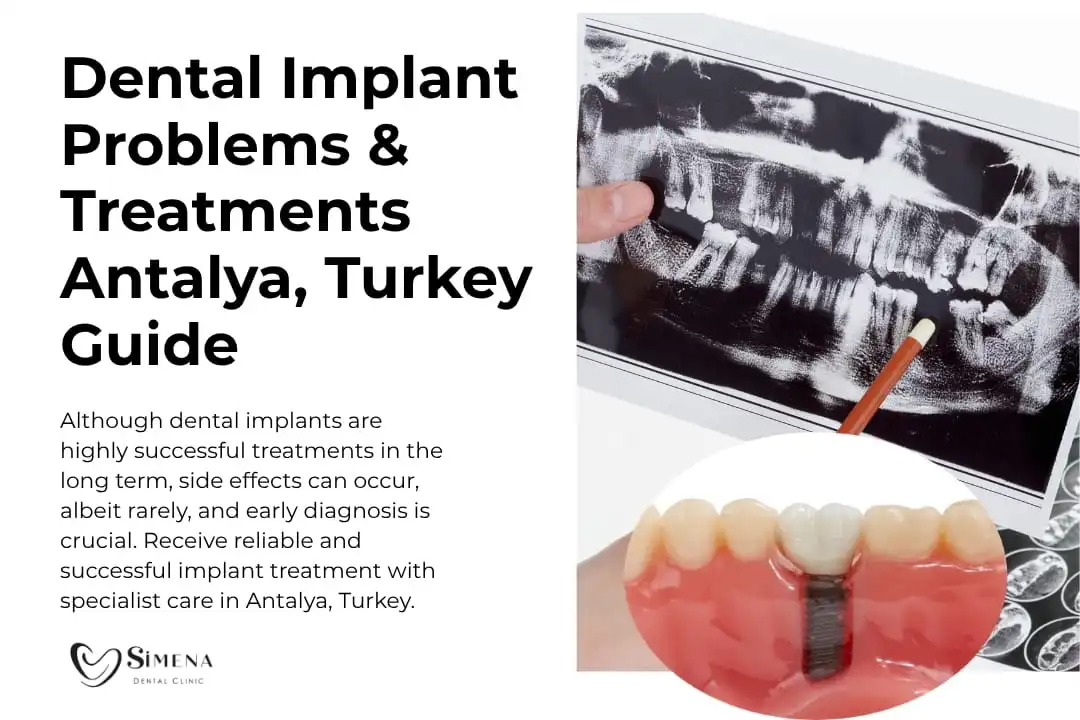
The body's healing capacity, oral hygiene, and the dentist's technique determine the outcome of this process. You can think of an implant as a small screw; it needs to be firmly attached to the bone. If this bond (osseointegration, i.e., the fusion of the bone with the implant) remains weak, even the slightest imbalance can turn into a problem over time. Most problems begin silently. A slight redness, a little tenderness… and most patients don't pay attention to it. However, understanding these early signals is the most critical step in protecting both the implant and the surrounding bone tissue.
During your dental implant consultation at Simena Dental Clinic, your dentist will inform you about the possible complications of dental implants and answer all your questions regarding dental implants.
Common dental implant problems
Implants are undoubtedly very successful. But let's be honest. When something goes wrong, it's usually due to a few very specific reasons.
Infection and poor healing
This is probably the most common problem we see in the early stages.
After an implant is placed, the area needs to heal quietly. A clean environment, stable tissue… that's the goal. But if bacteria get in, healing slows down. Sometimes it just looks like a little redness or mild discomfort. There's nothing dramatic at first. So people ignore it. Then slowly… the bone around the implant starts to react. And that's where things get more difficult.
The difficult thing is that early infection doesn't always cause pain. So patients think everything is fine, until it isn't.
A medical condition affects healing
Healing isn't just about the mouth. It's about the whole body working together. For example, someone with uncontrolled diabetes has a weaker healing response. Blood flow isn't ideal, and this directly affects how well the implant will integrate.
Smoking has a similar effect. It reduces the oxygen going to the tissues. And bone healing really depends on that oxygen.
Therefore, even if the implant is perfectly placed… the body still needs to cooperate.
Surgical technique
Placing an implant isn't just 'drill and insert'. The angle matters. The depth matters. Even the pressure during insertion matters.
If the bone overheats during drilling, it can damage the cells. You won't see it immediately, but it will affect healing later. Or if the position is slightly wrong, the forces during chewing won't be balanced. And over time, this causes stress. So yes… small details during surgery can make a big difference later.
Micro-movements of the dental implant
Stability is everything after implant placement. It absolutely must not move. Because if the implant moves during the healing phase, it cannot properly bond to the bone. You get a weak interface instead of a strong bond.
Bone deficiency
If the bone is too thin, too soft, or not high enough, the implant will not be stable from the start. And if you don't have this initial stability, the success rate of your implant treatment may decrease!
In these cases, we usually build the bone first. It takes more time, but it provides a much stronger foundation.
Failure to follow the doctor's instructions
While this seems simple, honestly, it's more important than people think. At our clinic in Antalya, we give simple instructions after implant treatment: Do not chew on the implanted area, keep the area clean, and take your medications.
Sometimes patients feel fine and think, 'I'm fine; nothing will happen.' But the healing process is still ongoing. And disrupting this process, even in the slightest way, can affect the outcome.
What you do after surgery is just as important as the surgery itself.
Complications from bisphosphonates
Some patients use medications called bisphosphonates, often for bone conditions like osteoporosis.
These medications affect how bone regenerates. And in some cases, healing after a surgical procedure, such as an implant, can become slower or less predictable. In rare cases, the bone may not heal as we expect.
That's why we always ask for a detailed medical history. Not just routine questions… this really changes the way we plan treatment.
Signs of dental implant infection
An implant infection usually doesn't start with strong pain. It starts quietly. That's why people miss it.
First thing you might notice is the gum around the implant looks a bit red or slightly swollen. Nothing scary, just… different than before.
Then maybe when you brush, there's a little bleeding. Again, not heavy. Just enough to ignore, which is exactly why it becomes a problem later.
Some patients say they feel a bad taste coming from that area. Or a slight smell. That's actually a warning sign.
As things progress, chewing can feel uncomfortable. Not sharp pain, more like pressure or sensitivity. And in later stages… this is important… the implant can feel slightly loose. If it gets to that point, we're already dealing with bone loss around it.
So, simple rule here: If something feels different around the implant, don't wait. Small signs are easier to fix.
Treatment and prevention in Antalya, Turkey
Now the good news… most implant problems can be controlled if you act early.
In Antalya, Turkey, implant treatments are done very often, especially because many patients come from abroad. So, clinics are used to managing both treatment and follow-up.
If we catch the problem early, treatment is usually simple. We clean the area deeply, remove bacteria, and support healing. Sometimes we add a local medication or antibiotics if needed.
If it's more advanced, then we go a bit deeper. The implant surface is cleaned more carefully, and in some cases, we try to rebuild the bone or gum around it.
But honestly… prevention is much easier than treatment.
Regular check-ups, proper brushing, and especially cleaning around the implant properly… these make a big difference. Also, following instructions after dental implant surgery is key. The first few weeks matter more than people think.
Benefits of successful dental implants in Turkey
When a dental implant is done right… it doesn't just 'replace a tooth.' It changes how you use your mouth day to day. And you start noticing that in small, real-life moments.
- First thing is chewing. You stop thinking about which side to use. You just eat. Hard foods, soft foods… it doesn't matter. That feeling of 'be careful' slowly disappears.
- Then comes comfort. No movement, no slipping, no pressure spots like with dentures. It feels stable. And honestly, that stability gives confidence without you even realising it.
- From a health point of view, implants help protect the bone. When a tooth is missing, the bone in that area slowly shrinks over time. An implant keeps that bone active. That's a big long-term benefit.
- They also protect the neighbouring teeth. With bridges, we sometimes have to cut down healthy teeth to support the structure. With implants, we don't touch the other teeth.
- Speech is another thing people don't expect. Missing teeth or loose dentures can affect how you pronounce certain words. With a stable implant, speech usually becomes clearer again.
- And of course… appearance. A well-made implant crown blends in. The colour, the shape, the way light hits it… when it's done properly, it doesn't stand out.
Now, specifically in Antalya, there's another layer to this.
Clinics here are used to working with international patients, so the process is usually well planned. From consultation to treatment to follow-up, things tend to be more organised. You're not left wondering what's next. Also, materials and techniques used are up-to-date. Digital planning, guided surgery… these things help make the placement more precise and the healing more predictable
And one more thing patient often mention…
They come for treatment, but they also get a bit of a break. The environment is calmer and less rushed compared to what they're used to. So, when everything comes together, good planning, proper placement, and good aftercare… an implant doesn't feel like a treatment anymore. It just becomes part of your life.
Get dental implants in Antalya at Simena Dental Clinic
If you're going to get an implant, who you choose really matters. That's the part people sometimes underestimate.
With our experienced team, the approach is quite simple… nothing rushed. First, your situation is checked properly. Bone, gums, bite… everything. Then the plan is made step by step.
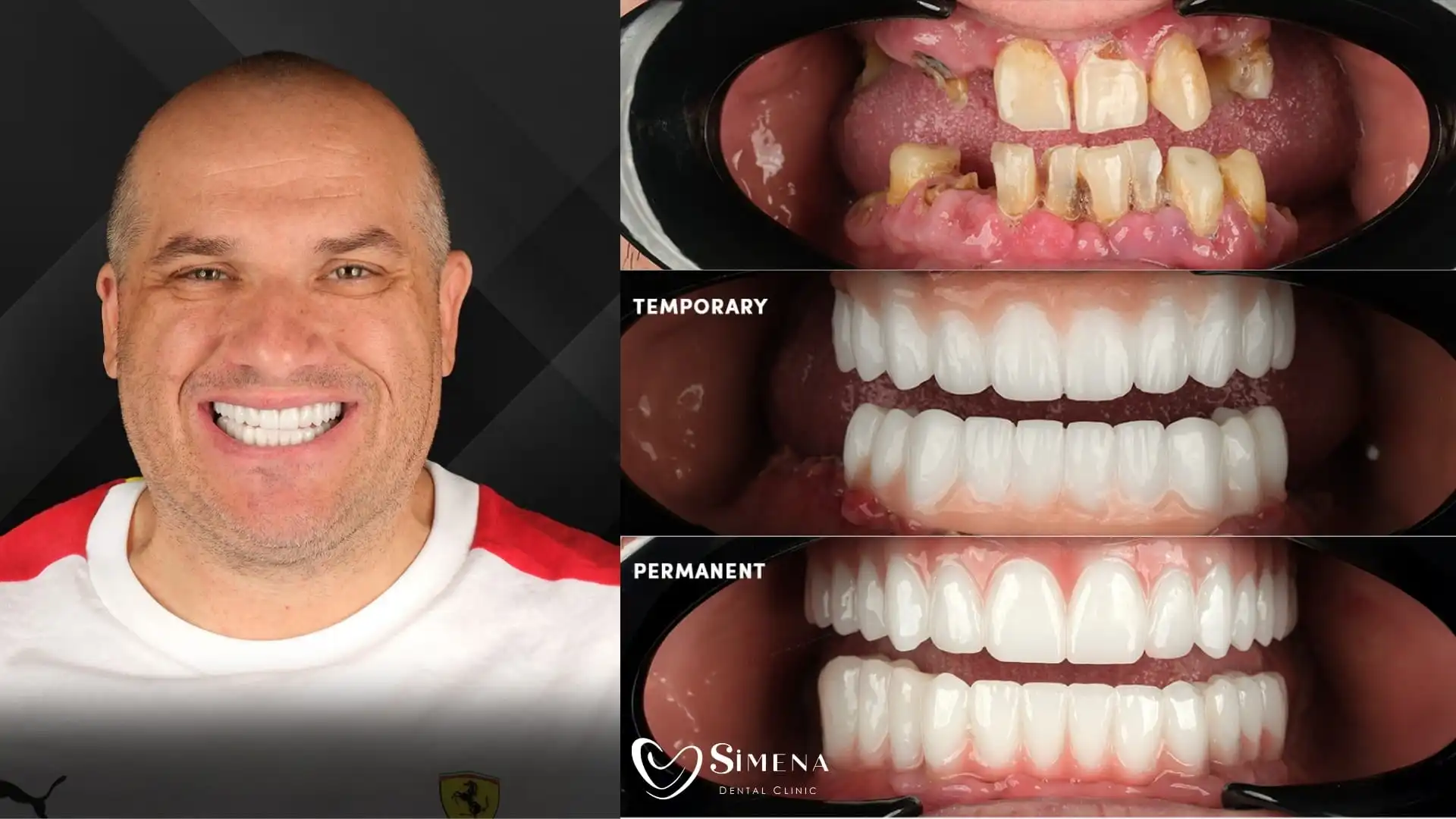
During the treatment, the focus is just doing it right. Not fast, not complicated. Patients usually feel more comfortable because things are explained in a normal way. You know what's being done and why.
And being in Antalya, Turkey… You handle your treatment, but at the same time you're in a place where things are calmer. You get a bit of fresh air, maybe some sun.
So, it’s not just 'come, get treatment, leave.' You can contact our team for detailed info.
FAQs
Do dental implants hurt?
No, dental implants don't hurt, because the procedure is done under local anaesthesia, so you don't feel pain during placement, and any mild discomfort after is usually manageable.
How long do dental implants last in Antalya, Turkey?
Dental implants can last 15–20 years or more because they fuse with the bone and become very stable over time.
What can cause a dental implant to fail?
A dental implant can fail due to infection, poor healing, lack of bone, or too much pressure on it during healing. A dental implant can also fail due to smoking, uncontrolled diabetes, poor oral hygiene, incorrect placement, or not following aftercare instructions.
Are dental implants safe in Turkey?
Yes, dental implants are safe in Turkey, because most clinics follow European standards, modern technology, and strict hygiene protocols, as long as you choose a qualified and experienced dentist
Can anyone get dental implants?
No, not everyone can get dental implants, because you need enough bone and good overall health for proper healing.
What is dental implant success rate in Turkey?
The dental implant success rate is around 95–98%, because in most cases the implant successfully integrates with the bone when done properly.