
What is a dental crown?
A dental crown is a fixed prosthesis applied to improve the appearance and function of teeth. It helps restore the function of the natural tooth, especially in decayed, broken, or weakened teeth. It can be thought of as a kind of "cap"; it completely surrounds the tooth, making it look similar to the original tooth when viewed from the outside. Dental crowns are generally made from durable materials such as porcelain, metal, or resin and, with proper care, can last for many years.
When are dental crowns needed?
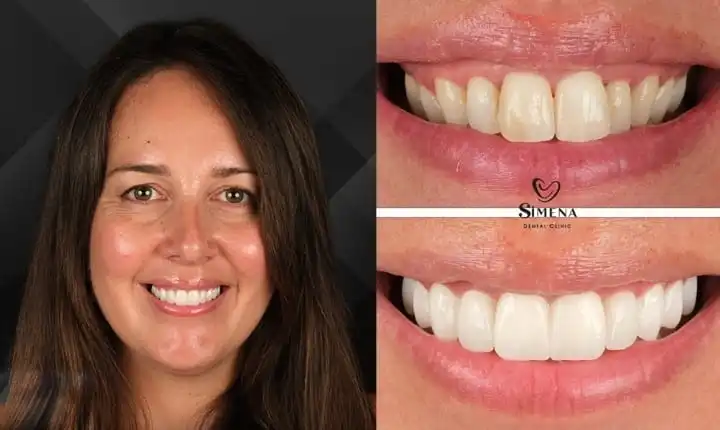
Dental crowns are dental treatment options that restore the shape, function, and aesthetics of a tooth. Zirconium dental crowns in Antalya, play a significant role not only in restorative care but also aesthetically, naturally improving the appearance of your teeth.
General situations where dental crowns are needed:
- Severely decayed teeth: If a tooth has lost its function, a crown protects the tooth and restores its normal function.
- Weak or broken teeth: Broken teeth can be strengthened with a crown and made usable again.
- After root canal treatment: Teeth that have undergone root canal treatment become more sensitive and need to be protected with a crown.
- Failure of large fillings: In cases where large fillings show inconsistencies, crowns make the tooth more stable.
- Severe wear or erosion: Wear on the tooth surface leads to aesthetic and functional losses. Crowns compensate for this loss.
- Cosmetic improvement: Aesthetic dental crowns can be used for teeth with discoloration or shape irregularities.
- Dental implant restorations: Dental implants become more aesthetic and functional by having crowns placed on them.
Types of dental crowns
Porcelain crowns
Porcelain crowns offer a top-tier option in dental restoration, providing both natural and aesthetic results. They restore the exact shape, color, and function of your tooth, often described by a dentist as "like a real tooth."
Benefits of porcelain crowns
- They perfectly mimic the color of your tooth. In other words, when a dentist places a porcelain crown on your tooth, no one will notice.
- They provide a transparency very similar to real enamel.
- They are metal-free, meaning they are biocompatible. There is no risk of allergies.
- If you drink coffee or smoke, porcelain crowns are resistant to staining. So, your smile will always be radiant.
Limitations of porcelain crowns
- They are not as durable as zirconium crowns when subjected to high biting forces.
- If you apply excessive force, porcelain crowns can crack.
- To properly place a porcelain crown, it may be necessary to remove a thin layer of enamel from the tooth.
Where are porcelain crowns used?
Porcelain crowns are used especially where aesthetics are important. Because they are more delicate and natural-looking than other types of crowns, they are an excellent choice for front tooth restorations.
Zirconia crowns
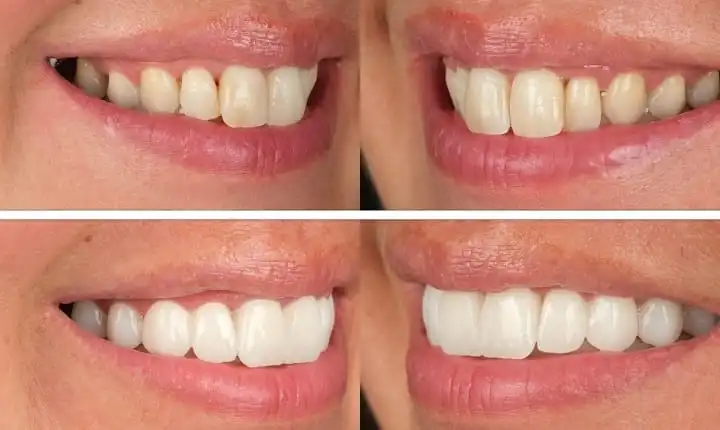
Zirconia crowns offer a more durable and long-lasting option thanks to their strong structure.
Benefits of zirconia crowns
- Zirconia is highly resistant to breakage and offers a robust solution that you can use for a long time.
- Compared to other ceramic crowns, zirconia is more wear-resistant and protects your opposing teeth.
- Zirconia crowns provide a natural look by perfectly matching the tooth color. They are less opaque than other ceramics and offer greater transparency.
- They are metal-free and biocompatible.
Limitations of zirconia crowns
- Although they are less transparent than porcelain or E-max crowns, there may be some limitations in terms of aesthetics.
- Special preparation and polishing are required to avoid grinding your opposing teeth. To be honest, this process requires a bit more precision.
Where are zirconia crowns used?
Zirconia crowns offer an excellent solution, especially for molars and patients requiring high biting force.
E-Max crowns (Lithium disilicate)
E-Max crowns are lithium disilicate ceramic materials that perfectly combine aesthetics and durability in dentistry.
Advantages of E-Max crowns
- One of the most notable advantages of E-Max crowns is their excellent aesthetic appearance. Their translucency levels are so good that they look like natural teeth.
- As they contain no metal, they also have excellent gum compatibility.
- Furthermore, the ability to perform precise cutting using digital processing allows for minimally invasive tooth preparation, which means less discomfort and a shorter recovery time for patients.
Limitations of E-Max crowns
- They may not be as strong as zirconium in areas subject to high forces, such as molars.
- They may be more expensive.
- There is also a risk of cracking when excessive force is applied.
Where are E-Max crowns used?
E-Max crowns offer the most natural-looking aesthetics, particularly for front teeth and small molars.
PFM crowns
Porcelain-metal bonding (PFM) crowns, with a porcelain outer surface and a metal inner surface, provide a strong foundation and a natural appearance.
Advantages of PFM crowns
The metal inner layer increases the crown's strength.
These crowns can be used on both front and back teeth, providing effective repair in both areas.
Limitations of PFM crowns
- The metal can create a dark line at the gum line over time, which can be aesthetically problematic.
- The porcelain layer may crack over time, revealing the underlying metal.
- There is a risk of porcelain eroding the enamel of opposing teeth.
- Compared to ceramic crowns, PFM crowns offer less natural transparency.
Metal crowns
Metal crowns are one of the strongest and longest-lasting types of crowns used in dentistry. They are usually made from gold, palladium, nickel, or chromium alloys. Simply put, metal crowns are like a solid “protective armor” placed on the tooth.
Advantages of metal crowns
- Metal crowns rarely break or crack. Therefore, they are one of the longest-lasting options among dental crowns.
- They easily withstand the pressure created when chewing hard foods.
- Minimal enamel (the hard outer layer of the tooth) is removed from the tooth for placement.
- They are a durable solution for people with bruxism (teeth clenching or grinding).
- They are a type of restoration that has been safely used in dentistry for decades.
Limitations of metal crowns
- They have a poor aesthetic appearance, so they are rarely preferred for front teeth.
- Some people may develop sensitivity to base metal alloys such as nickel.
- Aesthetic expectations should be low; ceramic or zirconia are generally preferred in Hollywood smile designs.
In what situations are metal crowns most commonly used?
In patients with back molars, in patients who need strong chewing force, and in individuals with teeth clenching or grinding problems.
How long do dental crowns last?
The lifespan of dental crowns cannot be explained by a single number. Two things determine durability: the material used and your daily habits. Clinical experience often shows that a well-made crown, combined with proper oral care, can last beyond 20 years. However, the same crown can develop problems much sooner due to excessive teeth grinding or poor hygiene.
In short, the lifespan of a crown depends somewhat on how you work with it.
Not all crowns are created equal. Think of them like knives used in the kitchen: some stay sharp for years, some are more delicate but look more aesthetic.
Average lifespan of dental crowns according to type:
- Gold crown: Average lifespan: 20-40 years and over
- Zirconia crown: Average lifespan: 15-20 years
- PFM (Metal-supported porcelain) crown: Average lifespan: 10-20 years
- E-max crown (Lithium disilicate): Average lifespan: 10-15 years
- All-porcelain crown: Average lifespan: 10-15 years
- Composite crown: Average lifespan: 3-7 years
Looking at the general average, most crowns can be used without problems for 10-15 years, and with good care, can last 20 years and over.
Comparison of types of dental crowns
| Comparison | Strength | Aesthetics | Best use |
| Zirconia crowns | Very strong - one of the most durable crown materials | Layered zirconia offers improved aesthetics | Best for back teeth and patients with strong bite forces |
| E-max crowns | Very strong - suitable for front teeth and premolars | Most natural looking crown material | Best for front teeth and aesthetic restorations |
| Porcelain crowns | Durable but slightly weaker than zirconia | Highly aesthetic and natural appearance | Best for front teeth where appearance matters |
| Gold crowns | Longest lasting and extremely durable | Least aesthetic due to metallic appearance | Best for molars and heavy chewing areas |
| PFM crowns | Strong metal base with porcelain layer | Moderate aesthetics compared to all-ceramic crowns | Suitable for both front and back teeth |
How much do different dental crowns cost?
The cost of a dental crown can vary significantly depending on the materials used, laboratory technology, and the country where the clinic is located. In the UK, the price of a crown in private clinics generally ranges from £350 to £1,500.
Dental crowns in Turkey are much more affordable than in the UK and USA, even though dentists use the same brands and materials. Please contact us for dental crowns, including porcelain, zirconia, and E-max crowns, at our dental clinic in Antalya.
Average prices by crown type:
| Types of dental crowns | Turkey | UK |
| Porcelain crown | £150 - £200 | £800 - £900 |
| PFM crown (Porcelain fused to metal) | £120 - £180 | £700 - £750 |
| Zirconia crown | £170 - £250 | £800 - £1,100 |
| E-max crown | £220 - £300 | £900 - £1,200 |
| Gold crown | £400 - £900 | £900 - £1,500 |
| Composite crown | £80 - £150 | £350 - £600 |
Types of dental crowns in Turkey: Contact Simena Dental Clinic to find the right solution
If you're considering getting dental crowns in Turkey, you're probably wondering: "Which crown is right for me?".
The truth is, there's no single "best" crown. The right crown is determined by considering the condition of your teeth, your expectations, and your lifestyle.
For dental crown treatment in Antalya, Dr. Sevgi Ozan and the Simena Dental Clinic team can help you.
Sometimes, a single crown can completely transform a smile.