
Understanding tooth shade categories
When selecting the colour of your teeth, finding the right shade is often one of the most important steps in cosmetic dentistry. The tooth colour guide not only helps you achieve an aesthetically pleasing result, but also helps you create a smile that blends in with your natural teeth. This guide enables your dentist to select the most suitable shade for you and create an aesthetically natural-looking tooth colour.
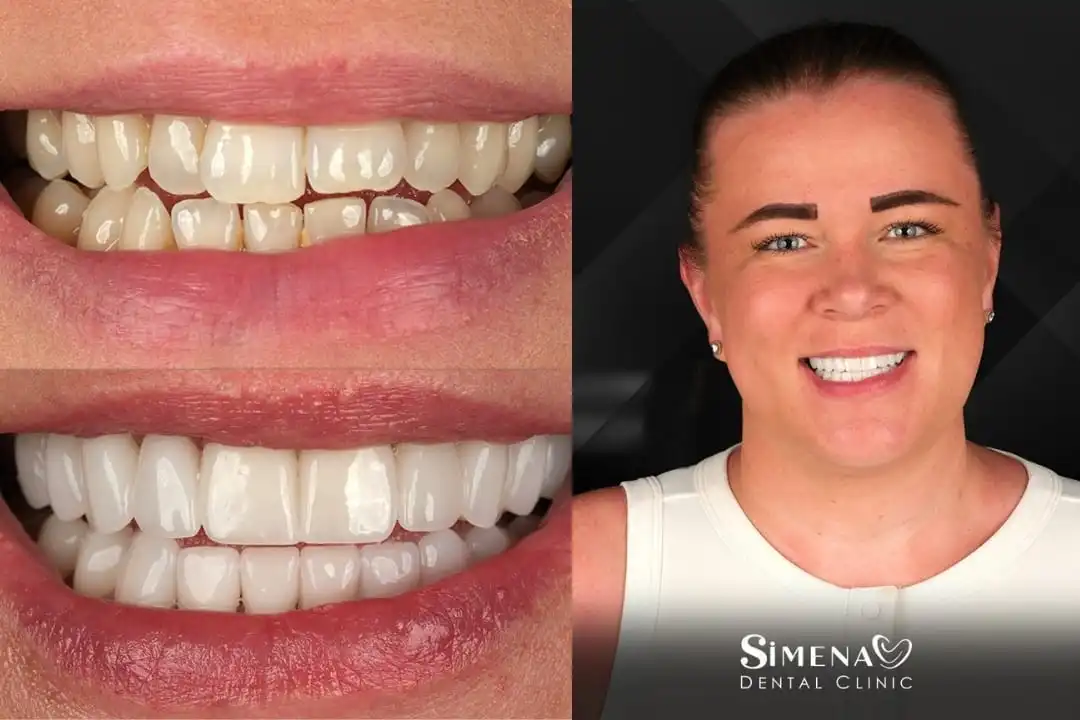
Tooth colour guide
The tooth colour guide allows patients to easily compare their teeth with the shades in the guide. Each letter in the guide represents a different tooth shade category:
- A (Reddish brown): Shades in the A category consist of reddish brown, reflecting the warm, earthy colours of natural teeth. These shades are suitable for those who want a warmer, more natural tooth colour.
- B (Reddish yellow): B shades include popular shades such as B1. These colours add vibrancy to your teeth by offering a natural warmth and brightness, while also providing a natural appearance.
- C (Grey): The C category includes grey shades, ideal for those who prefer cooler tones. These shades offer suitable options, especially for those with naturally cool-toned teeth.
- D (Reddish grey): The D category combines red and grey shades to create a rare colour palette. These shades may be preferred by those seeking a unique and distinctive tooth colour.
Hollywood white teeth shades: Achieving the perfect smile
Hollywood white tooth shades refer to a bright yet natural-looking smile. But it's not just about having "very white" teeth. The key is that the tooth colour harmonises with the face. Just as a garment doesn't suit everyone equally, not every shade of white will have the same effect on everyone.
Hollywood white tooth shades are generally classified as OM1, OM2, and OM3; OM1 is the whitest, while OM3 is a softer, more natural white. The right Hollywood white is chosen in conjunction with skin tone, eye colour, and overall appearance. The goal is not an artificial white, but to create a balanced and aesthetically pleasing smile. When the right shade is chosen, the smile becomes a noticeable yet natural detail.
What is the whitest shade of teeth?
When asked what the whitest shade of teeth is, the answer falls into two categories: natural white and aesthetic white. If you're asking about "the truly whitest tooth colour," the answer is usually OM1. OM1 isn't found in natural teeth. It's more commonly used in porcelain veneers and Hollywood smiles. It appears icy bright and is immediately noticeable under light.
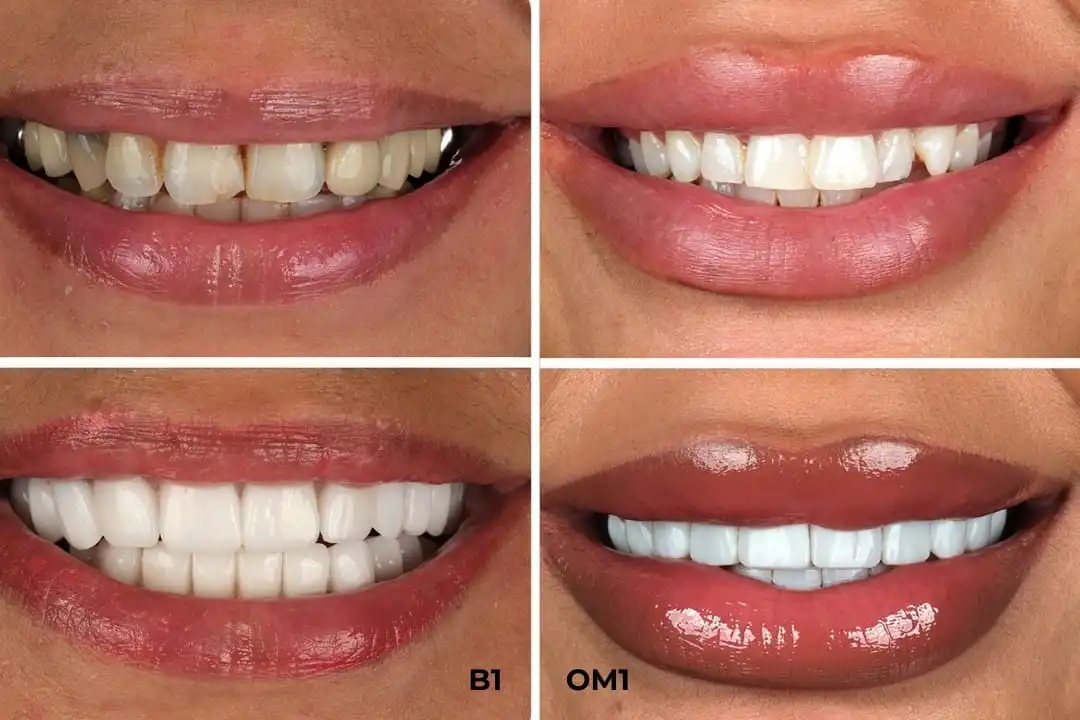
However, the whitest colour isn't always natural. Among natural teeth, the lightest shade is usually B1. B1 gives a bright but not artificial-looking white. It makes the teeth appear as if they were naturally white. That's why B1 is the ideal white for many people. OM1, on the other hand, is a bolder choice.
Tooth colours are classified into groups A, B, C, and D.
- A shades are warmer,
- B shades are lighter,
- C shades are grayer,
- D shades have a more complex structure.
The numbers in each group indicate the lightness. As the number increases, the colour darkens. For example, A1 is lighter than A2. In short, the whitest tooth colour is OM1, but the whitest natural tooth colour is B1. The best choice is always the colour that complements your face.
How white is too white for teeth?
Teeth lose their natural effect when they appear whiter than the whites of the eyes. This is because the whites of the eyes are the most natural white reference point on the face, and tooth colour is evaluated according to this balance. Excessively white teeth can detract from the aesthetic appeal of a smile and create an artificial look. Therefore, the correct tooth colour is not just the whitest shade but a white that harmonises with skin tone and eye colour.
A1 vs B1 teeth shade: What's the difference?
When we think of a great smile, those snow-white teeth immediately come to mind, right? But things get a little more colourful when you sit in the dentist's chair. Choosing between A1 and B1, in particular, is like a painter selecting the perfect shade of white from their palette.
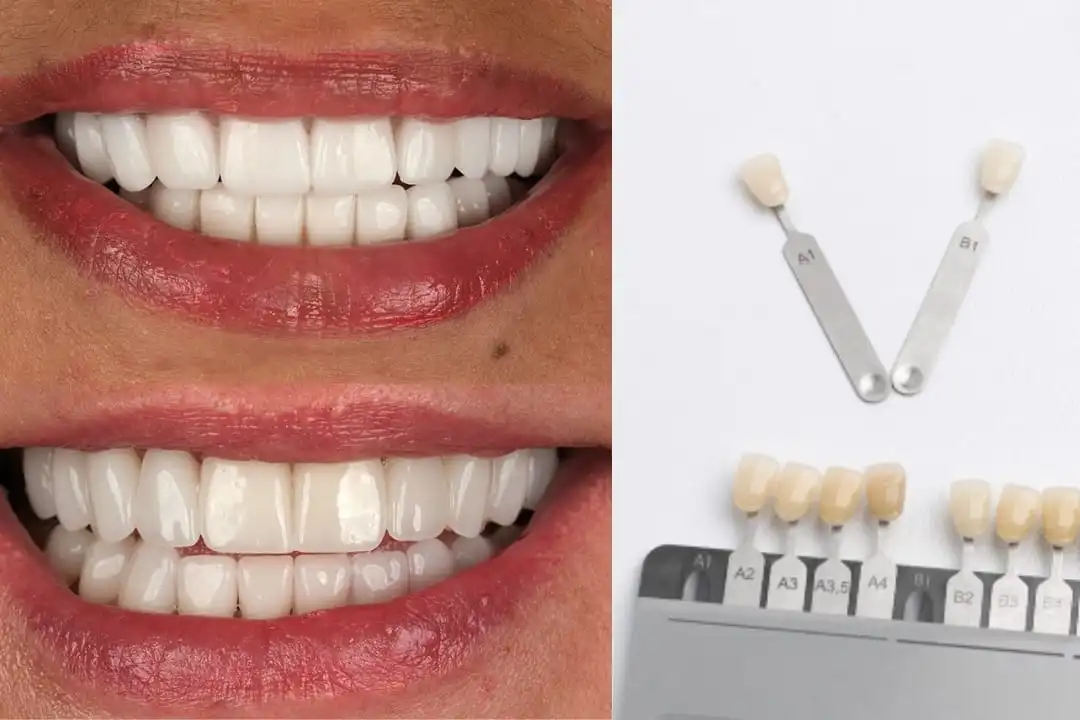
Let's put these two popular shades on the runway and figure out the difference.
Is A1 or B1 tooth colour whiter?
Logically, you might think A1 is the whitest because "A" is at the beginning of the alphabet. However, things don't work that way in the dental world. On the natural tooth colour scale, B1 is actually the lightest and brightest shade. A1 follows closely behind.
We can compare this to a coffee cup:
- B1 teeth colour: A bright and vibrant white with a drop of milk added. Its undertone is slightly yellowish, giving it a "youthful and healthy" energy.
- A1 teeth colour: Like an ivory white with a drop of caramel mixed in. It carries reddish-brown undertones. Therefore, it looks a little "warmer" and more refined than B1.
Which is the right choice for you?
If you are going to get veneers or are setting a goal after whitening, both of these shades represent the "natural peak".
Why B1? If you have very fair skin and want your smile to shine like a beacon but not look "artificial", B1 is perfect for you. It is the brightest natural shade in the VITA guide.
Why A1? If you are looking for a softer, less eye-straining whiteness that doesn't scream "I'm here", A1 is ideal. It provides a youthful look but isn't as bold as Hollywood white.
Defining the limit of naturalness
Most adults' teeth are actually A2 or B2 shades. So when you choose A1 and B1, you actually have brighter teeth than a large segment of the population. However, these shades are still within the limits of nature.
If you don't want to give the impression of having had dental work done, you should pay attention to matching your skin tone. For very dark skin tones, B1 can sometimes be "too shiny"; in this case, A1 acts as a more balanced bridge.
In conclusion, for the brightest natural teeth, B1 is your best friend, while for a warm and radiant natural look, A1 teeth are your best choice.
How to choose the right shade of white for your teeth?
There is no single correct answer to the question of which tooth shade to choose, because the best tooth shade is not the whitest one, but the one that harmonises with the teeth and face. If the shade you choose does not match the neighbouring teeth, the teeth will not look natural and will be aesthetically noticeable. Therefore, the goal is to achieve a flawless harmony with the rest of the teeth.
For a more natural result, choosing a shade two or three tones lighter than your current tooth colour, but not whiter than the iris, is usually the most balanced approach.
If you are unhappy with your tooth colour, it makes sense to consider professional teeth whitening before veneers or porcelain veneers, as the colour selection is more accurate after whitening.
Whilst shades such as A1 or B1 tooth colour may be preferred for natural and healthy teeth, those who want a brighter and more striking tooth colour may prefer Hollywood white shades such as OM1, OM2 or OM3.
Ultimately, tooth colour selection is a personal preference, but the guidance of an experienced cosmetic dentist is always the safest way to determine the most accurate tooth shade.
Which shade of white is suitable for teeth whitening?
The correct shade for teeth whitening is not the whitest shade, but the most natural-looking shade. Teeth appear balanced when they are a few shades lighter than the iris. Whiter shades are possible, but they do not always look natural. The aim is to make the smile feel real, not artificial.
For many people, shades A1 and B1 are an ideal starting point. A1 provides a softer white. B1 offers a brighter white. The whitening process reduces the yellow appearance of teeth and lightens the colour naturally. If procedures such as bridges, veneers or crowns are planned, more balanced shades like A2 or B2 are sometimes preferred.
Which shade of white is best for veneers?
The best shade of white for veneers is not the brightest one, but the shade that harmonises with the face and teeth.
If a large number of veneers are applied, a wider range of colours is possible, but if only a few teeth are veneered, a shade close to the natural teeth should be chosen.
Skin tone plays an important role in determining the right white; softer, warmer whites look more harmonious on fair skin, while slightly brighter but balanced tones work better on darker skin.
The white of the eye is also a good reference, as a natural balance is achieved when the teeth are the same colour as the sclera or slightly lighter.
Personal expectations also influence the choice; some people want a more striking white, while others prefer a calmer and more natural look.
Furthermore, as the white tone increases, teeth appear larger visually, so it is important to exercise restraint when choosing an excessively white shade.
Are teeth naturally white?
Teeth are not naturally pearly white, and this is completely normal. Most people's teeth have a light yellow or off-white tone because the inner structure of the tooth is naturally yellowish and the outer surface is semi-transparent. This structure gives teeth a slightly warm colour. As we age, this tone becomes more pronounced because the outer surface thins and the inner layer becomes more visible.
Additionally, tea, coffee, smoking, and certain foods darken tooth colour over time. Therefore, Hollywood-style pearly white teeth are not innate; they are usually achieved through cosmetic procedures such as whitening or veneers. In short, teeth appearing slightly yellow does not mean they are unhealthy; on the contrary, it often indicates they are natural.
How to preserve your natural tooth colour?
Maintaining your teeth's natural colour is not actually difficult, but it requires consistency. Regular brushing and flossing are the cornerstones of preserving tooth colour. Coffee, tea, red wine, and dark-coloured beverages can stain teeth over time, so rinsing your mouth with water after consumption is beneficial.
Teeth whitening products can be helpful when used correctly, but overuse can damage the tooth surface. Even if you have had veneers or whitening done, care is important because veneers do not change colour, but the natural tooth underneath can darken over time. Therefore, regular dental check-ups and professional cleaning ensure that your natural colour is preserved for a long time.
Conclusion
When recreating your smile, finding that 'perfect tooth whiteness' is actually an art of balance. While choosing the whitest tooth shade may seem appealing on paper, the real secret is achieving a natural harmony that complements your face when you look in the mirror.
Whether you prefer the warm, inviting tone of A1 teeth, the vibrant sparkle of B1 teeth, or the bold Hollywood white of the BL series, what matters is that the shade you choose dances with your skin tone and personality.
Personalised analyses carried out by experts, such as those at Simena Dental Clinic in Antalya, give you not just a colour code, but a flawless signature that renews your confidence. Remember that the most impressive teeth are not just the whitest, but those that best complement your overall facial balance.